The hive that
remembers
Bees have been talking to us for forty million years.
We finally built something patient enough to listen.
bites of food on Earth
begins with a bee.
Almonds, apples, blueberries, squash, coffee — a third of everything humanity eats depends on pollinators. They are the small, tireless engine beneath the whole table.
Whole colonies fall
silent overnight.
Beekeepers can lose 40% of their hives in a single year. A colony can collapse in days — and by the time you open the lid to look, it's already too late. The hardest part has never been caring. It's been knowing in time.
For Stuart's hives in a field in Harpswell, Maine — no power, no signal, miles from anywhere — there was no way to keep watch. Until now.
What if we could
simply listen?
A beehive is a 50,000-body organism that hums, pipes, fans, and dances — every signal a sentence about how it's doing. You can't open it without disturbing it. So we don't. We sit beside it, and we listen — for days.
From a box in a field
to a conversation with a colony.
Watch what becomes possible as each layer is added. Listening alone is nice. Listening, plus AI, plus memory — that changes everything.
We turn forty thousand wingbeats into a sentence you can read.
Not charts. Not jargon — the colony's own state, in plain words, with every line honest about how sure we are. When it says the bees found food, we never pretend to know where. We tell you what we heard, never what we guessed.
In a moment, you'll watch two days of those messages surface in real time.
Anyone can put a microphone on a hive.
That's not the breakthrough.
A recording understands nothing. And out here — a field in Maine — there's no internet to send it to, no outlet to plug into, no server farm listening back. You cannot phone a cloud AI from a meadow.
So the intelligence has to live right here — outdoors, off-grid, on a few watts of sun, thinking for itself. That is the frontier almost nothing can cross.
Impossible … until it isn't.
Everything in AI says this can't be done out here. You need the internet. You need cloud GPUs. You need a data center humming in a cold room. Unless you don't. A Cognitum One Seed the size of a deck of cards runs real, localized AI on a few watts of sun — doing the genuinely hard thing a microphone never could: the thinking, the understanding, the remembering, right there at the edge.
This is what it looks like to bring AI out of the data center and into the living world — close enough to actually listen.
It's Dr. Dolittle, made real: the animals have always been talking. Someone finally taught a little machine to listen well enough to understand — and that someone is Cognitum One.
Cognitum One runs apps called Cogs.
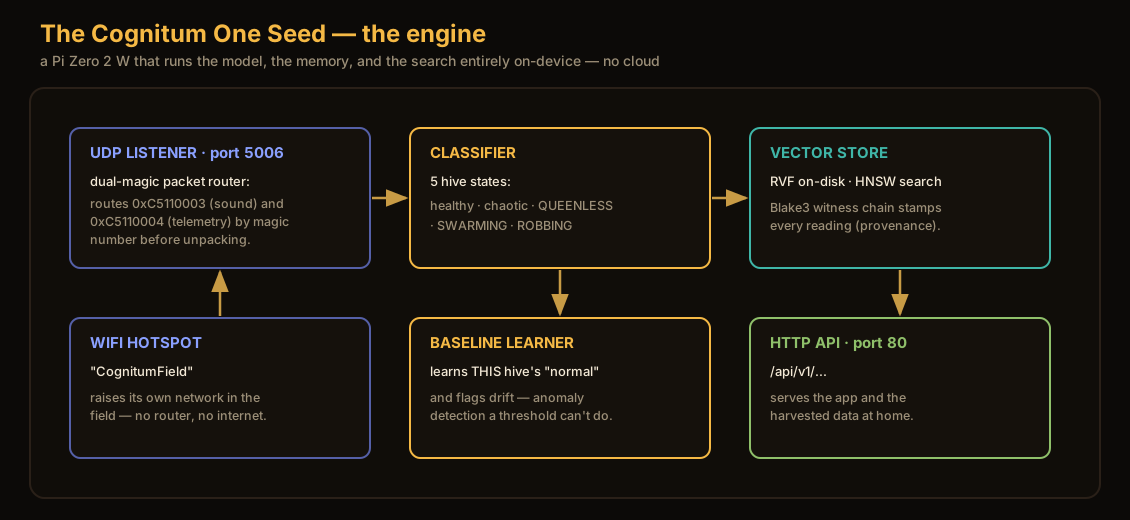
Cogs help people understand what's possible. One of the ones that was created was called Beehive — drop it on the Seed, wire up a few sensors, and the box becomes a hive-listener, sorting the colony into healthy, queenless, swarming, or robbing, around the clock. Here's everything happening inside it:
Four sensing nodes. One Rust brain. Why ears, not cameras.
The boards even carry cameras — but a beehive is pitch dark, and a colony doesn't speak in pictures. It speaks in sound and vibration. So "vision sensor" is the wrong model: we wire these as ears and skin, all feeding one little Rust application that becomes the intelligence beacon.
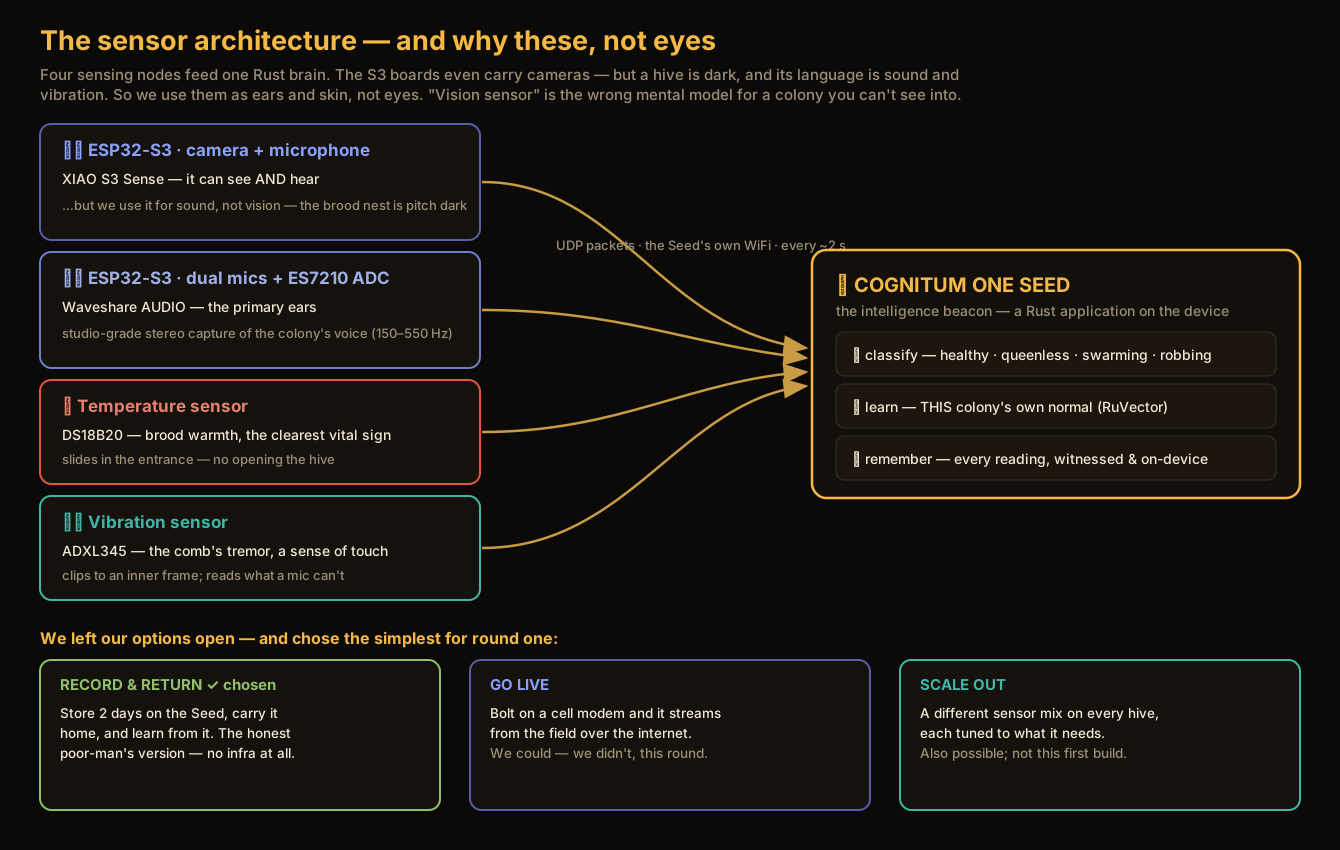
↑ Two ESP32-S3 boards (one with a camera + mic, one with dual mics), a temperature probe, and a vibration sensor — all streaming over the Seed's own WiFi into the Rust app. And the honest part: we could have bolted on a cell modem to stream live, or run a different rig on every hive. For round one we chose the simplest thing that works — record two days, carry it home.
At first, all it gave us was numbers.
Eight bands of sound, a temperature, a tremor — twenty times a minute. You could plot it on a chart. But no human thinks in eight-band frequency vectors. Raw data is not understanding.
So we kept pushing: how do you turn a river of raw signal into something a person can actually use?
The engine underneath is RuVector — vector intelligence wired straight to the sensors, making sense of the physical world on-device. It learns this colony's own normal, remembers every moment, and turns that river of numbers into a single, readable line of meaning.
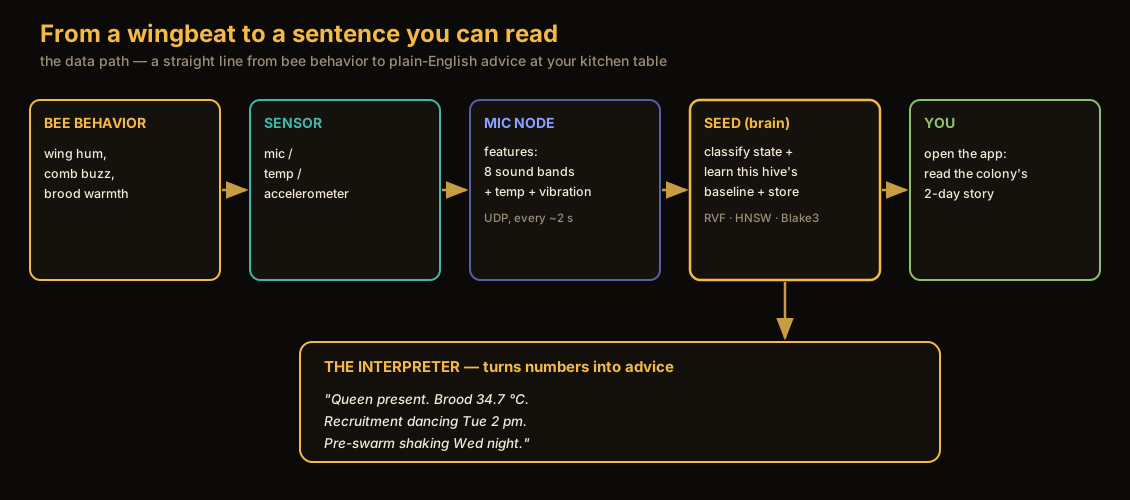
↑ The whole pipeline — bee behaviour becomes sensor signal, becomes features, becomes a learned read on the colony, becomes a sentence you understand. RuVector is what carries it across that gap.
So we picked a language no human speaks.
We could have aimed this at something easy. Instead we pointed it at a beehive — a conversation in sound and vibration that no person on Earth understands. If edge AI can begin to make sense of that, it can make sense of almost anything in the physical world. The bees aren't the gimmick — they're the proof.
A Seed, a few sensors, a microphone — sealed against the weather.
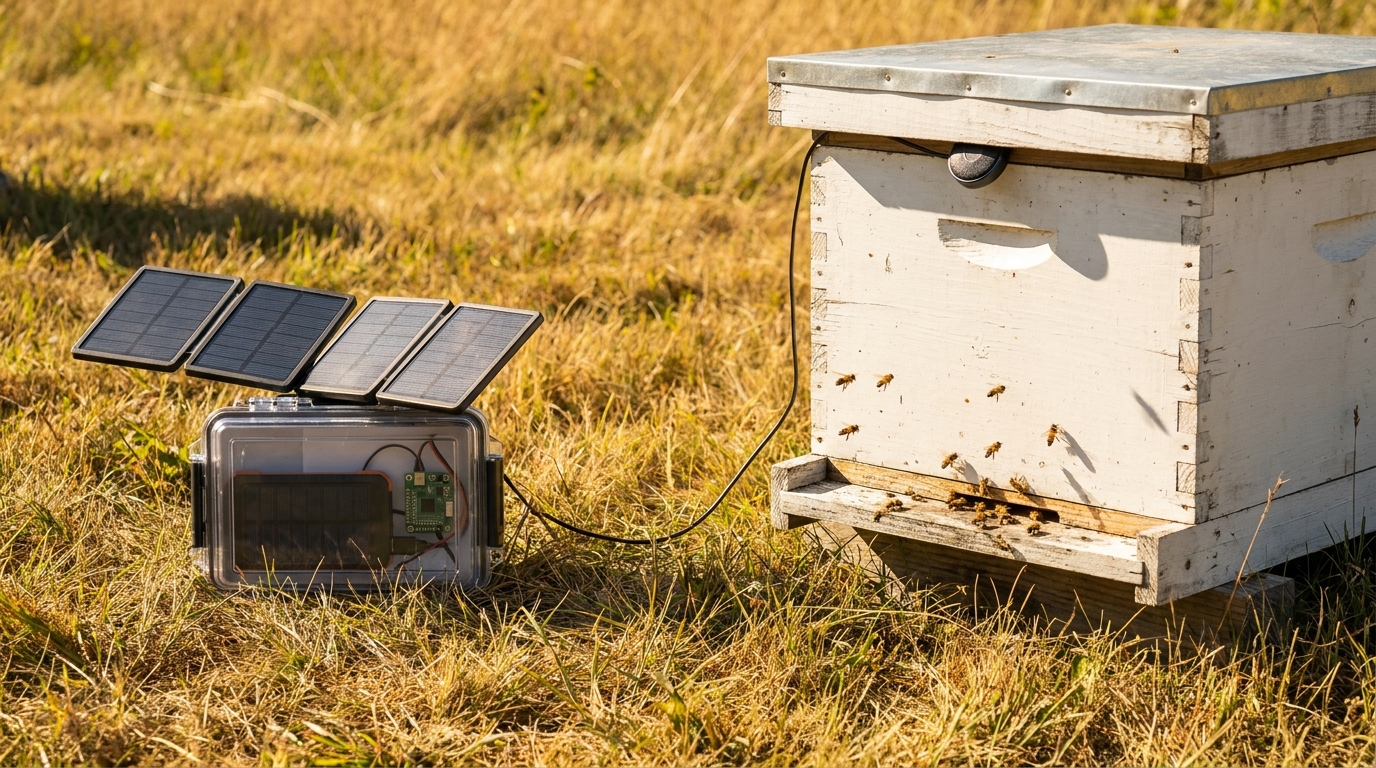
↑ One sealed, weatherproof box on the ground holds the Cognitum One Seed and the solar bank. The microphone and temperature probe sit at the hive; the vibration sensor clips to a comb. A probe that slides in the entrance, four push-on wires — and it runs for days on the sun.
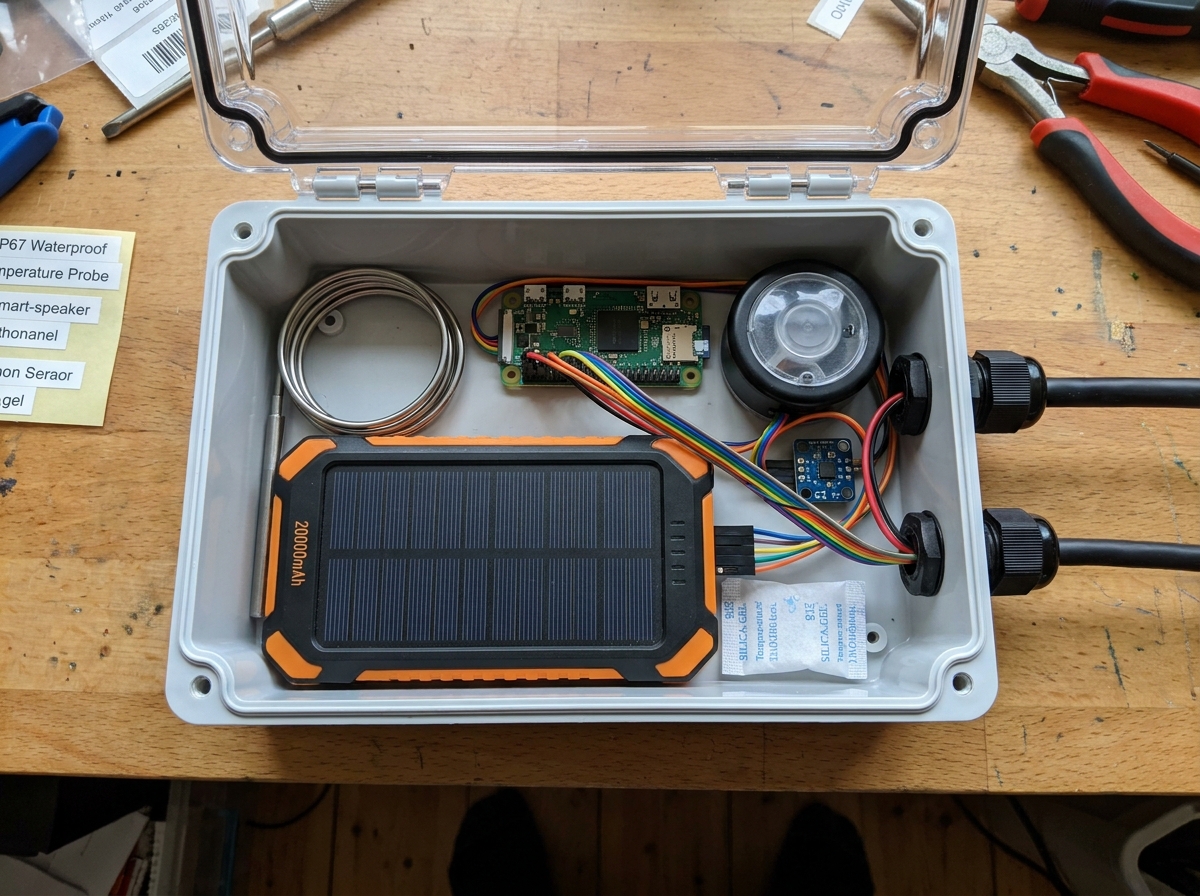
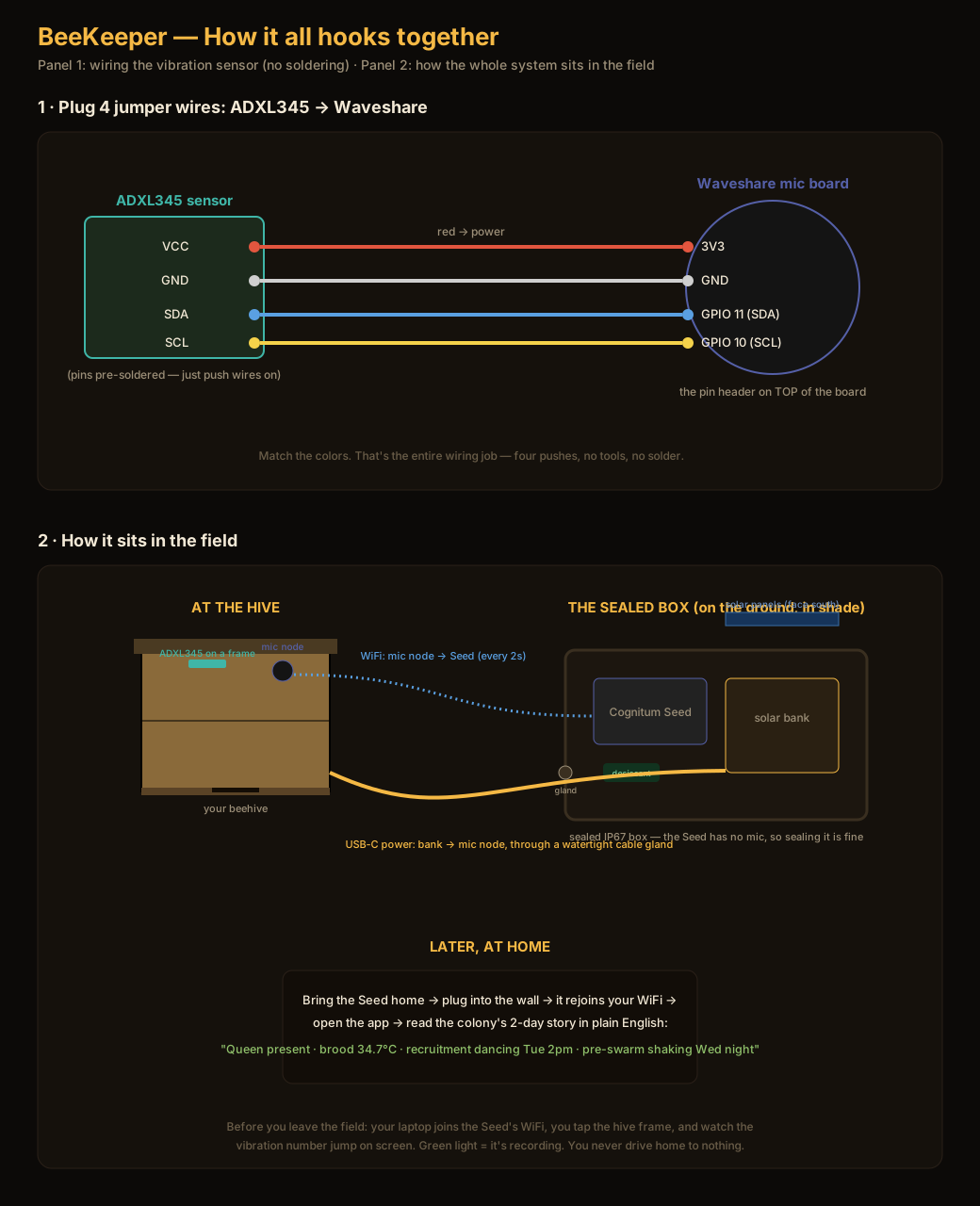
↑ Everything packed in the box (left), and the entire no-solder wiring job — four push-on jumper wires (right).
The numbers become a story you can read.
Not a wall of charts — a living dashboard: the colony drawn by the behaviour we can actually hear, with its own messages surfacing over the bees as the clock runs. It's replaying a real 48 hours — “food this way” at 9:57, a danger warning at 12:36, the queen's signal faltering before dawn on day two, and the slide into trouble by afternoon.
Open the full dashboard ↗ 🐝 Open the BeeKeeper app — live hive, reasoning & Ask the Hive ↗↑ The actual website, live and replaying two days. By day two the mood ribbon turns to queenless and the advisory card calls it out — you'd have known days before you ever opened the lid.
This is what it looks like when AI quietly helps us take care of the living world.
Keep the bees healthy, and they keep the world fed.